

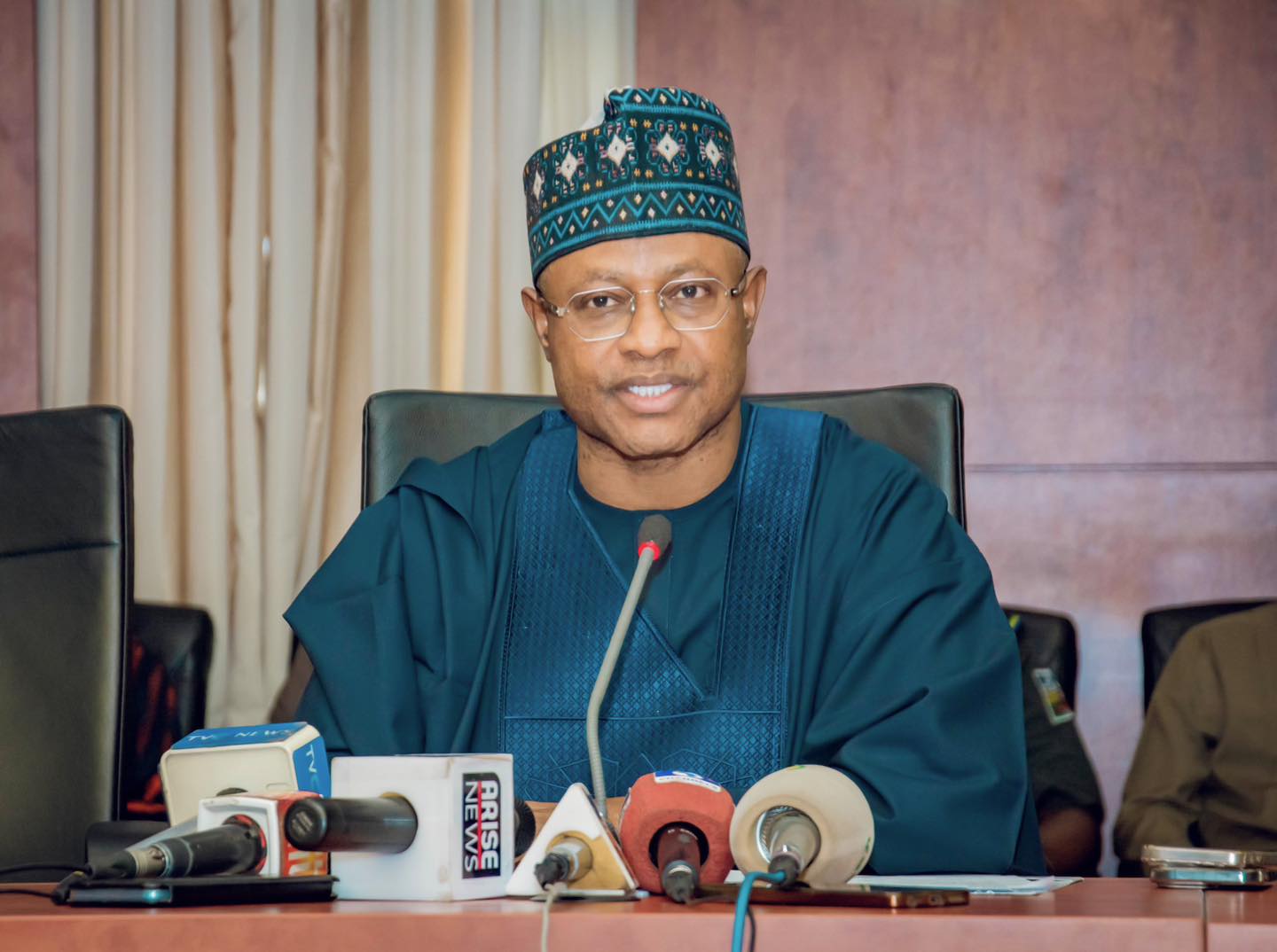
“In a Hausa radio interview marking his second anniversary in May 2025, he reiterated that no new loans have been taken from any local or international financial institution.”
_________________________________
By JAMES SWAM
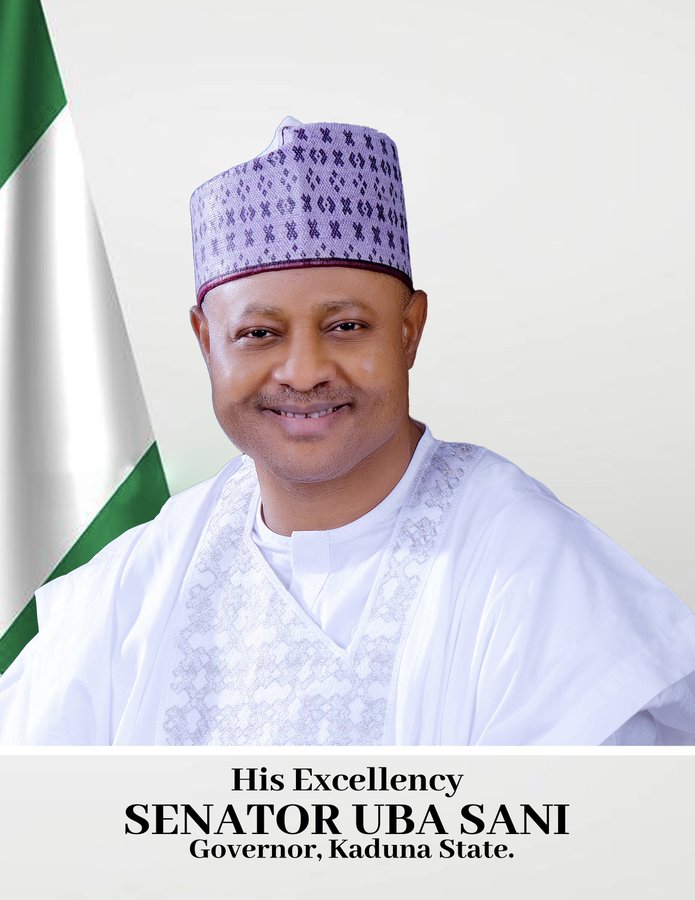
At a time when many states are grappling with shrinking revenues, rising obligations and growing dependence on loans, Kaduna State has taken an unconventional fiscal route. Since assuming office, Governor Uba Sani has maintained a strict stance against new borrowing, a peculiar choice in a fiscal environment where many subnational governments routinely tap into credit markets to bridge funding gaps.
In multiple public engagements, budget presentation and media interviews, Governor Sani has consistently stated categorically that his administration has not borrowed a single kobo, domestic or foreign. This assurance has become a defining feature of his stewardship and offers an important lens through which to assess both the challenges facing Kaduna State and the policy choices adopted to navigate them.
The governor insists that discipline, improved revenue mobilisation and prudent spending can deliver results without mortgaging the future. By categorically rejecting new borrowing, the governor chose instead to confront inherited liabilities head-on.
Governor Uba Sani inherited a complex and sizeable debt portfolio contracted by previous administrations. The loans, confirmed in multiple reports and official remarks, paint a picture of significant financial burdens passed on to the new administration. Moreover, the loans were already tied to statutory deductions from the state’s federal allocations.
The impact became more severe due to exchange rate shifts, which significantly increased the naira value of foreign-denominated loans. In one month alone, ₦7 billion of a ₦10 billion federal allocation was deducted for debt servicing, leaving the state with limited funds for basic expenditures such as salaries, infrastructure and social services. Rather than resort to refinancing through new loans, the administration opted to absorb the shock and reorganise spending priorities, signalling what would later crystallise into a clear no-loan policy.
At a town hall meeting in March 2024, Governor Sani publicly outlined his desire not to borrow. “Despite inheriting $587 million and ₦85 billion in debt, we have not borrowed a single kobo. We are focused on fiscal discipline and sustainable development,” he told stakeholders.
Throughout 2024, he rejected claims that Kaduna was secretly borrowing, explaining that increases in reported debt figures were largely the result of exchange-rate revaluation of existing foreign loans, not new borrowing.
In a Hausa radio interview marking his second anniversary in May 2025, he reiterated that no new loans have been taken from any local or international financial institution. He noted that several banks had attempted to persuade his government to take on fresh loans “under different guises,” but he turned them down to avoid “sinking the state into further debt.”
_____________________________
“Central to sustaining Kaduna’s no-loan policy has been the growth of internally generated revenue (IGR).”
_______________________________
This is a bold position in a country where subnational borrowing is often seen as a necessary tool or conventional way to finance capital projects and bridge recurrent expenditure shortfalls. Kaduna’s approach stands in contrast to many peers that have leaned on external and domestic markets to fund development initiatives.
In September 2025, during the groundbreaking ceremony for a new 16.5-kilometre asphalt road connecting several towns in Lere Local Government Area, he stated clearly again that his administration would not borrow to finance projects or incur new debt in project execution. Instead, the state would complete abandoned projects inherited from previous administrations with available resources.
Similarly, when presenting the 2026 budget to the Kaduna State House of Assembly a few weeks ago, the governor reiterated the no-borrowing stance, noting that while the administration had not contracted new loans, it had spent the significant sum of ₦114.9 billion on debt servicing.
This policy of eschewing new debt underscores a belief that accumulating more debt would compromise the state’s long-term financial health and burden future budgets with growing interest and principal obligations. Therefore, cultivating fiscal discipline and prioritising sustainable development is a welcome policy deeply rooted in a broader agenda to look inward and press for internal revenue generation.
Truth is, with limited revenue and high inherited debt servicing obligations, many states face tough choices about which public services and infrastructure projects can be funded without resorting to loans. This is why in Kaduna the emphasis has shifted toward prioritising internal resource mobilisation, prudent financial management, and strategic allocation of available funds.
Central to sustaining Kaduna’s no-loan policy has been the growth of internally generated revenue (IGR). Under Governor Uba Sani, the state has intensified efforts to strengthen tax administration, expand the tax net and leverage digital platforms to improve compliance. And the state’s revenue service has been active, aggressively pursuing defaulters.
________________________________
“Rather than resort to refinancing through new loans, the administration opted to absorb the shock and reorganise spending priorities, signalling what would later crystallise into a clear no-loan policy.”
_________________________________
Official figures show that IGR rose impressively from ₦58 billion pre-2023 to ₦62 billion in 2023 and ₦71 billion in 2024, reflecting gains from reforms implemented by the Kaduna State Internal Revenue Service (KADIRS). In the first two months of 2025 alone, the state generated ₦14 billion, reinforcing its status as one of the strongest IGR-performing states in northern Nigeria. As the year draws to a close in a few days, the IGR is expected to reach ₦85 billion or so, the revenue service chairman hinted at a tax event in early December.
This steady rise in internal revenue has played a crucial role in funding recurrent expenditures such as salaries and overheads, while also supporting priority capital projects. More importantly, it has reduced reliance on borrowing as a stopgap measure, allowing the administration to align spending with available resources.
By complementing federal allocations and providing predictable funding, IGR growth has become a cornerstone of the governor’s fiscal discipline agenda.
Governor Sani’s stance has attracted both praise and criticism. Supporters argue that his no-borrowing policy has shielded Kaduna from escalating debt burdens and fostered greater financial accountability. They highlight his administration’s efforts to cut non-essential costs and stop executive perks as evidence of a culture of prudence.
Critics, however, contend that refusing to borrow, particularly for critical infrastructure and social services, risks slowing development and leaving the state reliant on insufficient recurrent revenues. They argue that judicious borrowing, when tied to high-impact projects with clear economic returns, can be a viable strategy for growth without jeopardising fiscal stability.
Nevertheless, Kaduna’s approach reflects a broader philosophical choice: to prioritise debt avoidance and sustainable budgeting over expansion financed through external credit.
The no-loan policy continues to shape the state’s fiscal narrative becoming a defining element of the governor’s leadership style, and an important point of comparison for other states grappling with debt pressures. Moving forward, the state’s challenge will be to balance fiscal restraint with development aspirations, ensuring that roads, schools, healthcare centres, and economic opportunities continue to advance even under tight financial conditions.
It is hoped that the policy will deliver sustained economic growth and public service improvements. Or will critical needs eventually force a rethinking of the no-borrowing stance? For now, Kaduna stands as a case study in fiscal discipline, choosing to navigate inherited debt without adding to it – a decision rooted in cautious pragmatism and a long-term vision for financial stability.
Swam is a writer, author, and public relations practitioner
Leave a Reply