

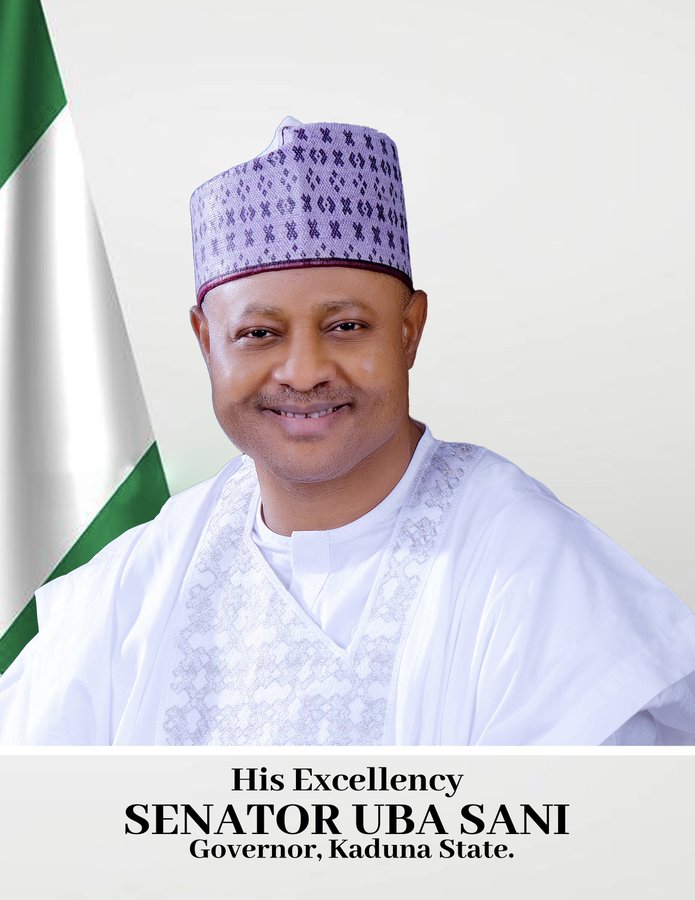
“For the administration, agriculture is no longer treated as a peripheral sector. Rather, it has become central to Kaduna’s economic agenda…”
By James S. Swam
Agriculture contributes about 42 per cent of Kaduna State’s Gross Domestic Product (GDP) and accounts for nearly 60 per cent of employment, according to records. It was therefore fitting that the 2026 Nigeria Public Relations Week (NPRW), organised by the Nigerian Institute of Public Relations and hosted by the Kaduna State Government, focused on the theme: “Nigeria’s Food Security: From Policy Paper to Public Plates – The Imperatives of Public Relations.”
The event provided Governor Uba Sani with a major platform to restate his administration’s commitment to agricultural development and food security. The governor, who was honoured as the only Honourary Fellow and Patron of the institute, described the gathering as being in line with his administration’s “vision of a food-secure Kaduna, where policy is not confined to paper but translated into productivity, prosperity, and shared progress.’’
With the Vice President, ministers, lawmakers, politicians, traditional rulers, captains of industry, public relations professionals, and other dignitaries in attendance, the conference was also an opportunity for Kaduna State to showcase its agricultural transformation drive over the past three years, especially its thoughtful policy on the ministry’s budgetary allocation as well as plans for the future.
For the administration, agriculture is no longer treated as a peripheral sector. Rather, it has become central to Kaduna’s economic agenda, which aims to empower rural communities, strengthen agricultural value chains, and expand opportunities in agribusiness.
In many rural communities across the state, farming used to begin with hope at the start of the rainy season and end in disappointment at harvest. Numerous challenges faced farmers in the past. Inputs were scarce, mechanisation was limited, and government support was often on paper. Between 2024 and 2026, however, the sector witnessed a positive shift.
Under Governor Uba Sani’s administration, agriculture steadily moved into reckoning, backed by increased funding and cautious reforms designed to rebuild confidence among farmers and reposition Kaduna as a leading agricultural state.
The budgetary allocations story is in the public domain for scrutiny by any doubting Thomas. In 2023, the agricultural sector received only about ₦1.48 billion, representing just 0.4 per cent of the state budget under the previous administration. Agric enthusiasts had criticised the allocation as inadequate for a sector that remains critical to economic growth and food sustainability.
However, in 2024, Uba Sani’s first budget, the allocation rose significantly to ₦22.54 billion, representing five per cent of the state budget. The increase was targeted at boosting food security, supporting rural livelihoods, improving access to farm inputs and expanding agricultural infrastructure. By 2025, the allocation jumped to ₦74.02 billion, representing about 9.36 per cent of the total budget. The focus was on strengthening rural economies through fertiliser distribution, mechanisation and broader support for farmers.
Within two years, the state government said agricultural investment had grown by more than 4,000 per cent, bringing Kaduna to achieve the 2014 Malabo Declaration target, which encouraged African governments to allocate at least 10 per cent of public spending to agriculture.
In the 2026 budget, Kaduna State allocated ₦108 billion to agriculture and food security, representing 11 per cent of the ₦985.9 billion budget. For many farmers, the increase translated into improved access to fertiliser, tractors, rural feeder roads and agribusiness opportunities. The budgets have impressively grown at a speed that drew applause from Dr Akinwunmi Adeshina, president of the African Development Bank (AfDB) at the time.
Further checks revealed that to support the 2024 and 2025 farming seasons, the government undertook what it described as the largest fertiliser distribution programme in Kaduna State’s history. About 900 trucks of fertiliser, amounting to roughly 540,000 bags, were distributed to over 300,000 smallholder farmers across the 23 local government areas of the state.
The administration also expanded its flagship agricultural support initiative, Tallafin Noma (A Koma Gona), a Hausa phrase meaning “support for farming” or “return to the farm.” Through the programme, more than 120,000 smallholder farmers received improved seeds, fertilisers, agrochemicals and mechanisation support.
Also in 2025, the government launched the Dry Season Agricultural Empowerment Programme to expand irrigation farming and improve year-round agricultural production. As part of the initiative, about 10,000 solar-powered water pumps were distributed to farmers across the state to encourage both dry and wet season farming.
Kaduna State’s agricultural ambitions also gained momentum through the Special Agro-Industrial Processing Zone (SAPZ) initiative. In 2022, Kaduna was selected alongside seven other states to pilot the first phase of the programme in Nigeria. Governor Uba Sani became the first governor in the country to officially launch the project in 2025, while Vice President Kashim Shettima performed the groundbreaking ceremony for the Kaduna State SAPZ at Daki-Takwas in Chikun Local Government Area.
To support the project, an Agro-Industrial Hub in the same community strategically located along the Kaduna-Abuja Expressway, will serve as a centre for agro-processing industries, logistics services and export-oriented agribusinesses. Within another community, Dutsen-Wai, the Agricultural Transformation Centre will provide infrastructure for crop aggregation, processing and storage, particularly for strategic crops such as maize, tomatoes, and ginger, for which Kaduna is known to be a top producer in the country.
To further strengthen agricultural exports and quality standards, Kaduna State, with support from Afreximbank, is developing an Agricultural Quality Assurance Centre, the first of its kind in Northern Nigeria. Beyond the statistics and budget figures, the ongoing reforms reflect an attempt to restore confidence among farmers and reposition agriculture as a major driver of economic growth, food security and rural development in Kaduna State.
In three years, the administration has achieved what no previous government has in agriculture. The significant investments in the sector and the strategic plans to support farmers are praiseworthy. Indeed, Nigerian Public Relations Week offered an opportunity for critics of the government to examine the sector, and the results are surprisingly impressive.
Swam is a former Secretary of the Nigerian Institute of Public Relations, NIPR, Kaduna State chapter.

Leave a Reply