

“For many Christians, the abrupt halt of sponsorship felt less like a fiscal reform and more like a withdrawal of recognition.”
By James S. Swam
In late July 2015, the then-Governor Nasir el-Rufai stood before Kaduna citizens and made what he described as a hard but necessary choice. The state government, he said, could no longer afford to shoulder the enormous cost of sponsoring religious pilgrimages.
At the time, the figures were unbelievable. He said his predecessor, Ramallan Yero, and the 23 local government chairmen sponsored over 2,000 Muslim pilgrims in 2014. And out of 810 Christian pilgrims that year, 800 were sponsored by the same government. Altogether, the exercise cost the government nearly N1.5 billion, according to him.
“Our state simply cannot afford this expense any longer,” el-Rufai declared in a broadcast, as his administration embarked on what it called radical steps to reduce the cost of governance, shore up internally generated revenue, and block leakages in public finance. For many observers, it was a bold fiscal decision. For others, it was painful. And for some communities, particularly within the Christian population, it left a lingering sense of loss.
For many Christians, the abrupt halt of sponsorship felt less like a fiscal reform and more like a withdrawal of recognition.
Even though the decision seemed as if it affected both Muslim and Christian pilgrimages, the historical sensitivities of Kaduna meant that critics were deeply suspicious of government real intentions. Kaduna has endured more than its fair share of tension — religious conflicts, communal violence, and political polarisation. In such a landscape, policies carry weight beyond their financial implications.
Sheikh Haliru Maraya, an Islamic cleric who has been deeply involved in interfaith dialogue, has confirmed the fear of Christians. At a press conference few days ago, he stated that Mallam Nasir el-Rufai sponsored approximately 985 Muslims to Saudi Arabia between 2015 and 2023. According to him, the figure comprised 730 officials and 255 sub-officials, excluding the years 2020 and 2021 when the global COVID-19 pandemic disrupted pilgrimage activities.
But, Christian pilgrimage, he highlighted, did not receive similar government support throughout the eight-year tenure of the former governor. While this discovery shocked some observers, critics of the el-Rufai administration were not surprised, at all. His penchant for open discrimination against Christianity was entrenched.
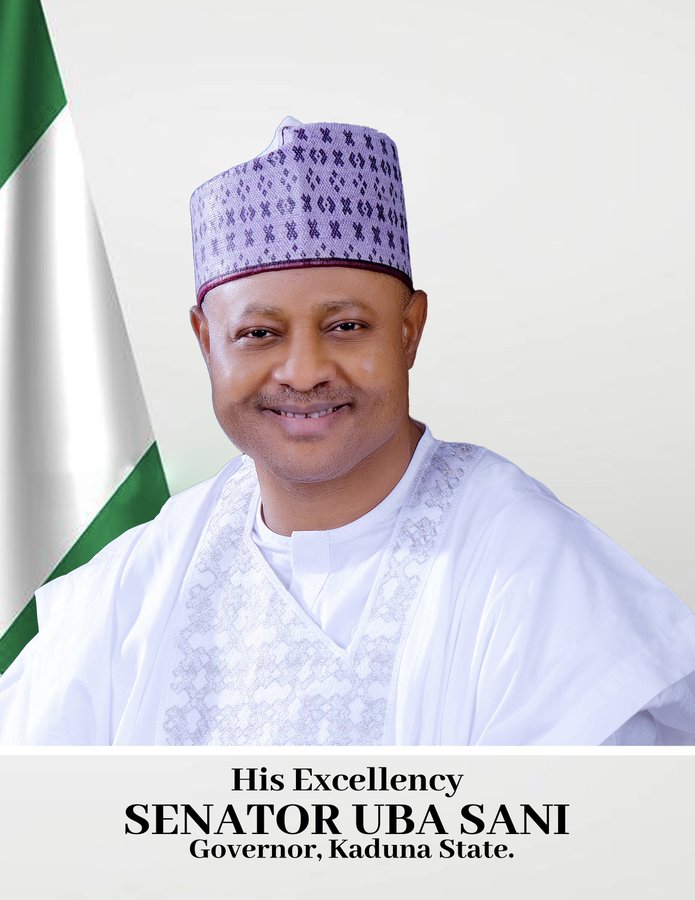
More than a decade later, under the leadership of Governor Uba Sani, the issue of Christian pilgrimage has resurfaced in the public conversation, serving as a symbol of inclusion, trust, and political will. Governance is never just about arithmetic. It is also about perception, emotion, and the delicate management of diversity in a state as religiously and culturally complex as Kaduna.
Over the years, conversations around inclusion became louder. Community leaders, clergy, and civil society actors consistently emphasised the need for the government to not only balance the books, but also balance relationships. It is against this backdrop that Governor Uba Sani’s approach is being interpreted by many as a shift in tone and in philosophy.
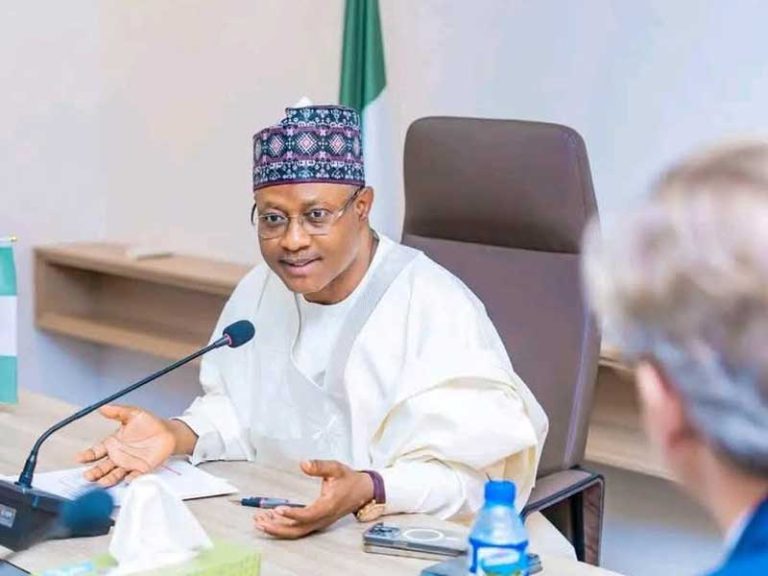
Governor Uba Sani came into office with a message centred on healing and people-focused governance. While he has maintained a commitment to this philosophy, his administration has demonstrated a readiness to engage symbolic issues that speak to unity. The restoration of Christian pilgrimage support, even in a more structured, transparent, and fiscally responsible form, is being viewed as a testament to that political will.
Political will is not merely about making popular decisions. It is about reading the emotional pulse of a people and responding in ways that strengthen social cohesion without undermining economic stability. In conversations with Christian leaders across the state, there is a recurring sentiment: that the restoration represents recognition.
For elderly civil servants who had saved for years with the hope of supplementing their funds through government support, the earlier suspension closed a door. For families who saw pilgrimage as a once-in-a-lifetime spiritual milestone, it felt like an unreachable dream. Under Uba Sani, the reopening of that door — even if cautiously — carries weight.
Consider the story of a retired teacher in Zaria who spent 35 years in the classroom. For her, pilgrimage was not tourism. It was a spiritual culmination, a prayer whispered through decades of modest living. When sponsorship was halted, the dream seemed distant.
Or the civil servant in Kafanchan who had watched colleagues embark on the journey to Jerusalem in earlier years. To him, the opportunity symbolised not privilege, but participation — evidence that government acknowledged the faith of all its citizens.
El-Rufai’s era was defined by discrimination, hatred, and abuse of power disguised as reform. While fiscal discipline ensures sustainability, symbolic gestures restore dignity. In plural societies, governance must walk both paths. The contrast between the two administrations lies in approach, ideology, and emphasis.
Uba Sani’s emerging style appears more relational. His messaging often emphasises peace-building, inclusion, and bridging divides. This does not necessarily mean a reversal of fiscal prudence. Rather, it suggests a fine-tuning, a belief that economic sustainability and social harmony are not mutually exclusive.
Critics of pilgrimage sponsorship argue that government funds should never be used for religious travel, especially in a secular democracy. But supporters counter that in Nigeria’s socio-political context, pilgrimage boards are established institutions, and government involvement has long been part of the structure. What distinguishes leadership is not merely the position taken, but the sensitivity with which it is handled.
Kaduna’s history makes trust-building essential. Any perception of exclusion can quickly inflame tensions. By demonstrating willingness to revisit sensitive decisions, Governor Uba Sani signals that governance is not static. It can evolve in response to the mood of the people.
Clergy members who have engaged the current administration speak of dialogue rather than distance. Community leaders describe a listening ear. In politics, gestures matter. They may not erase the past, but they can soften its edges.
The central concern raised about affordability remains valid. Kaduna State still faces developmental challenges: schools requiring renovation, roads in need of repair, and health facilities demanding upgrades. No responsible government can ignore these priorities. The challenge, therefore, is balance. If pilgrimage sponsorship is structured with transparency, clear eligibility criteria, cost-sharing mechanisms, and strict budgetary limits, it need not become a drain on public finances.
The lesson of 2014 was about excess — over 2,000 Hajj pilgrims and 800 Christian pilgrims sponsored in a single year at a cost nearing N1.5 billion. Such a scale may indeed have been unsustainable. No wonder it took Governor Uba Sani three years to make a decision. A moderated, well-managed model can avoid repeating that burden while still acknowledging the spiritual aspirations of citizens.
Ultimately, the restoration of Christian pilgrimage is about more than travel to Jerusalem. It is about signalling that no community feels sidelined. In a state striving for stability, small bridges can prevent large divides. Governor Uba Sani’s political will in this regard may not generate dramatic headlines, but it speaks to a quieter ambition: healing.
The story of Kaduna over the past decade is not one of villains and heroes, but of shifting priorities. El-Rufai’s reforms were disguised as urgent fiscal realities. Uba Sani’s adjustments reflect an urgent need for social cohesion. But history often remembers leaders not only for the budgets they balanced, but for the bonds they strengthened.
In restoring Christian pilgrimage support, Governor Uba Sani appears to be saying that fiscal discipline need not come at the expense of faith, and that inclusion is itself an investment — one whose dividends are measured not only in naira, but in trust. In this journey toward peace and prosperity, the hope among many citizens is simple: that governance will remain both prudent and compassionate.
Swam, a former press secretary to the deputy governor of Kaduna State, is a writer, author, and PR practitioner.


Leave a Reply