

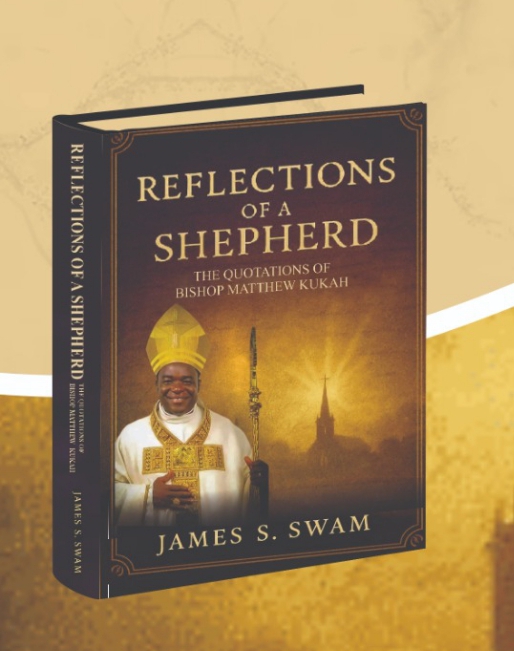
“This book, comprising 10 chapters and covers themes, spans through many themes like religious tolerance; leadership and governance; nation building; democracy; human rights and justice; corruption; lamentations…”
_________________________________
By Simon Reef Musa
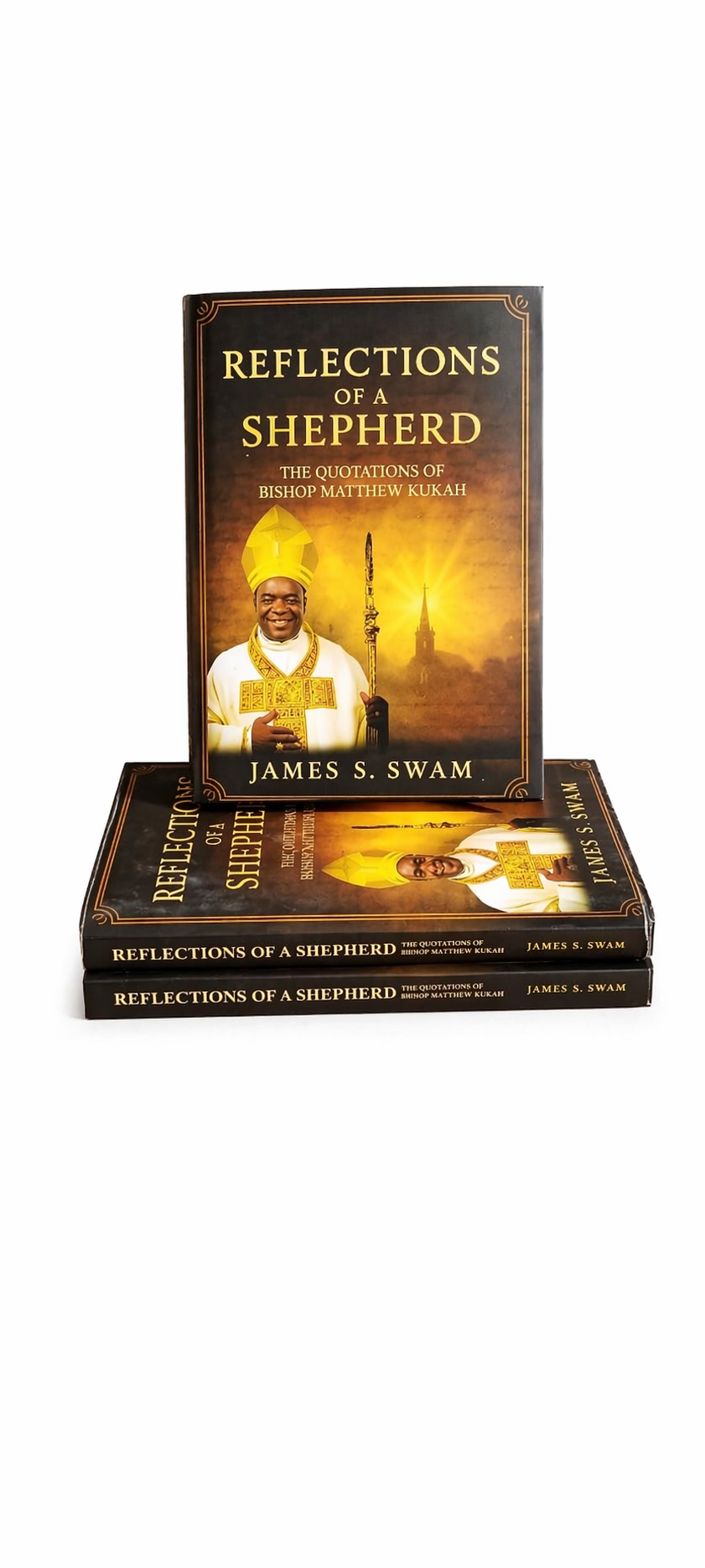
A book entitled ‘Reflections Of A Shepherd: The Quotations Of Bishop Matthew Kukah’, written by a veteran media practitioner, James S. Swam, is due for release in the coming months. The 229-page book contains insightful quotations by one of Nigeria’s most cerebral ecclesiastics on his public discourses and media interviews. The relevance of the soon-to-be-released book is justified in selected quotations that define the footprints of Bishop Kukah’s public intellectual status and his relentless efforts shown in diagnosing Nigeria’s ills.
This book, comprising 10 chapters and covers themes, spans through many themes like religious tolerance; leadership and governance; nation building; democracy; human rights and justice; corruption; lamentations; keep hope alive, tributes and pot-pourri, the author captures the essentials of the Bishop’s discourse on some of the themes that have dominated his interventions in both local and global discourses. Without disappointing readers, Swam selects relevant quotations of the Bishop of the Sokoto Catholic Diocese to reflect the shepherd’s profound depth of understanding of the perplexity called Nigeria.
The Tireless Priest
One distinct feature of Kukah’s writing is his capacity to improve his writing in line with new knowledge spanning several decades. This improvement is strikingly noticeable for some of us who have followed him since the days of his column: ‘The Mustard Seed’ in the Sunday edition of the now rested ‘New Nigerian Newspapers’. When compared with his present style of writing, this cleric of global scholarly status has evolved a style in which his admirers and critics have come to acknowledge his depth of intellectual analysis of issues at both local and international platforms.
As one of the country’s most respected public intellectuals, Bishop Kukah has demonstrated an in-depth profundity in diagnosing Nigeria’s many woes. From his first book, ‘Religion, Politics and Power in Northern Nigeria’, which was presented in 1993, and other books, articles, and media interviews, among others, this Catholic priest, first in the Ikulu Chiefdom from Anchuna, Zangon Kataf Local Government Area of Kaduna State, has continued to play the purveyor role in broadening national debates that has left inspiring footprints of increased devotion to his faith and irrefutable scholarship.
Kukah’s writings are devoid of sentiment, and his message of hope ripped through a land that has delivered too little for its citizens. Unafraid of being misunderstood in a nation that hates speakers of truth, ‘Fada’, as he is popularly known and called, deploys disarming humility and passionate humanity in explaining the rationality of his views. Blessed with both the profound gift of writing and oratorical skills, his views, often misconstrued, are often seen as the last ‘bus stop’ junction by many. Some members of the public would prefer to follow the mob than resort to a deep appreciation of issues.
Probing Insights
I have read nearly a hundred of Bishop Kukah’s writings and watched his media interviews. What sets him apart is his fresh ideas on issues, even when he had treated such issues. He does not write to impress, but he demonstrates an unprecedented capacity to engage new perspectives on issues under discourse. More than anyone, this humanist of a cleric who does not suffer intellectual indolence is a probing powerhouse in a country that has become a metaphor for missed opportunities, including the manipulation of religion to keep citizens chained in the fathomless pit of bigotry.
Realising the need for inclusion, the first quotation of the book, “Building an inclusive society demands tolerance and accommodation”, highlights Bishop Kukah’s solution for a nation enmeshed in mutual suspicion. Drawing the relevance of Nigeria’s two major religions as shown in the second quotation, “We will never be good Muslims or Christians if we do not embrace, respect and honour one another and our faiths”, the cleric speaks directly to adherents of both faiths to embrace our humanity. Reminding Nigeria’s leadership that “Politicians must strive to make politics noble”, the Bishop also states that though “What we call electoral violence is absolutely nothing but a contestation between poverty and opportunity. This is why we may have all the electoral violence in Nigeria, but there will be no electoral violence in Asokoro… Victoria Island”.
Exposing the failures of democracy that has failed the people, Bishops raises red flags over the manifest weakness of the ballot system to address Nigeria’s challenges: “Our democracy is in decline, and is in a recession precisely because it is evident to us that what we are working with is not something that comes with our own historical, cultural or even anthropological experiences”.
Holding Unto Essence
The Kukah book of quotations is a slim summation of his priestly vocation and public intellectualism. As a true reflection of his roles as the bringer of hope, the founder of The Kukah Centre has never let go of questioning the corrupt and oppressive system that continues to dehumanise citizens. Beyond criticising the government, the priest constantly reminds citizens to embrace an ethical revolution against the manipulation of religion, ethnicity, and other fault lines that weaken our nation’s potential to rise above the dark tunnel of disillusionment.
Despite citizens’ diminished hope in the ballot system of government, which is caused by our weird democracy, Bishop Kukah has never lost hope in the power of ordinary citizens to change Nigeria’s tragic trajectory. The Archbishop, Catholic Archdiocese of Kaduna, Most Rev. Matthew Man-Oso Ndagoso, in his foreword to the book aptly captures the main reason for this book of quotes: “I wish these quotes stimulate our collective guilt, renew our commitment to the common good, and encourage us to believe, as Bishop Kukah consistently does, that tomorrow can indeed be greater than today if we choose the path of truth and responsibility”.
Being an avid reader of Bishop Kukah for over four decades, I fully attest that Swam has succeeded in capturing essential quotes that briefly sum up the ecclesiastical devotion and intellectual depth of a priest bringing hope to a nation that has continued to be crippling disenchantment for not only Nigerians but also a source of concern for the global community. I recommend this book, not only to readers and scholars, but also to those interested in the inspiring quotes of an untiring priest who has refused to give up on his country of birth.
Leave a Reply