

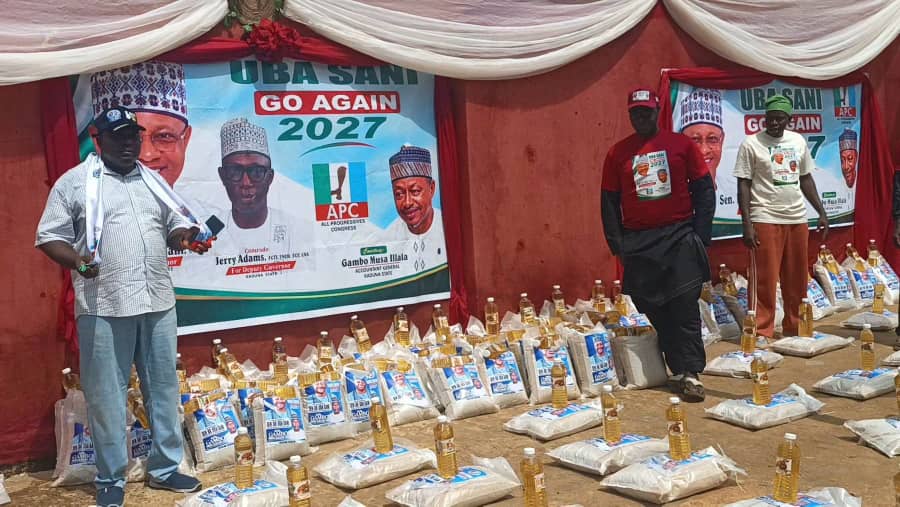
”The Accountant General distributed bags of rice and cooking oil in Kafanchan. However, some residents are asking why the exercise appeared to be concentrated largely in two predominantly Muslim wards within the emirate.”
———————————————
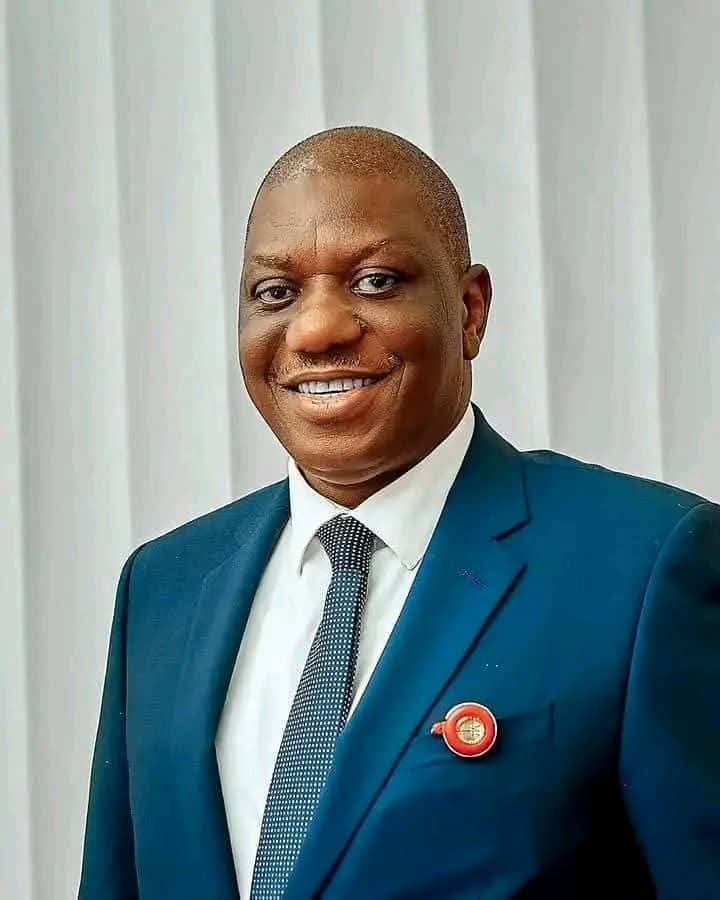
When Gambo Musa Ilallah was appointed Accountant General of Kaduna State, many people in Jema’a Local Government Area and Kaduna South Senatorial Zone in general received the news with excitement.
For a constituency that has produced other Accountant General under the APC administration, following the tenure of Shizzer Bada, Ilallah’s appointment was seen as another opportunity for Jema’a to contribute meaningfully to the governance of Kaduna State.
There was also an expectation that the new Accountant General would carry with him the spirit of inclusion and broad-based community engagement that many residents associate with his predecessor.
But the distribution of a humanitarian support initiative to about 500 beneficiaries a few days ago has begun to generate questions in some quarters. This is not necessarily about the distribution of the food items itself, but about who was included, who was left out and what informed the choice of beneficiaries.
The Accountant General distributed bags of rice and cooking oil in Kafanchan. However, some residents are asking why the exercise appeared to be concentrated largely in two predominantly Muslim wards within the emirate.
If the intervention was conceived as a community outreach, they ask, why were the other three wards in Kafanchan Central (Maigizo, Takau, and Kaninkon wards) reportedly not included?
The questions become even more significant when the wider political geography of Jema’a is considered. The local government has 12 wards spread across three zones. Why, residents are asking, was the intervention not extended to other parts of the local government, particularly communities that may equally be facing economic hardship?
Beyond the distribution itself, there are questions about representation.
Why was the member representing Jema’a Constituency in the Kaduna State House of Assembly, Hon. Ali Kalat, reportedly not invited or involved? Why were the local government chairman and the 12 councillors not invited or involved? What about the APC local government chairman and other party officials?
There are also questions concerning the absence of other prominent government and political stakeholders from Jema’a, including the Senior Counsellor on Political Affairs to the Governor, Ado Dogo, and the Commissioner for Humanitarian Affairs, Hon Yunana Barde who is also from the local government.
Then comes perhaps the most politically sensitive question: if Ibrahim Koli, a state APC official from the emirate, was invited to the exercise, why were other significant political stakeholders from different wards reportedly not represented?
These are not questions that should simply be dismissed. They go to the heart of an important issue, that is, what kind of politics of inclusion should the people of Jema’a expect from those who hold public office?
Jema’a is a politically diverse constituency with different religious, ethnic and community interests. Its strength lies in the ability of its leaders to build bridges rather than create political divisions. That is why clarity matters.
As the 2027 political season approaches, every public intervention by a government official will inevitably be viewed through a political lens. The best way to dispel suspicion is therefore transparency: explain the purpose of the intervention, the criteria for selecting beneficiaries and why particular communities were included or excluded.
The Accountant General has an opportunity to provide those answers.
For many people in Jema’a, the issue is bigger than bags of rice and cooking oil. It is about whether public office will be used to build a constituency where some electorate would feel represented, valued and included while others are relegated.
And ultimately, the question is simple: can Jema’a expect a politics that rises above religion, ethnicity and sectional interests and gives every ward a genuine sense of belonging? Can the emirate alone deliver the votes needed by the APC to win Jema’a LGA? Are they really working for Uba Sani and Tinubu?
The former Accountant General, Shizzer Bada, treated every of the 12 wards equally in the distribution of humanitarian affairs during her tenure. Gambo Musa Ilallah should borrow her model for effective political presence and resist being manipulated by a handful in the emirate whose stock in trade is to fan embers of political division.
This piece was sponsored by: Grassroots mobilizers for Tinubu/Uba Sani


Leave a Reply